
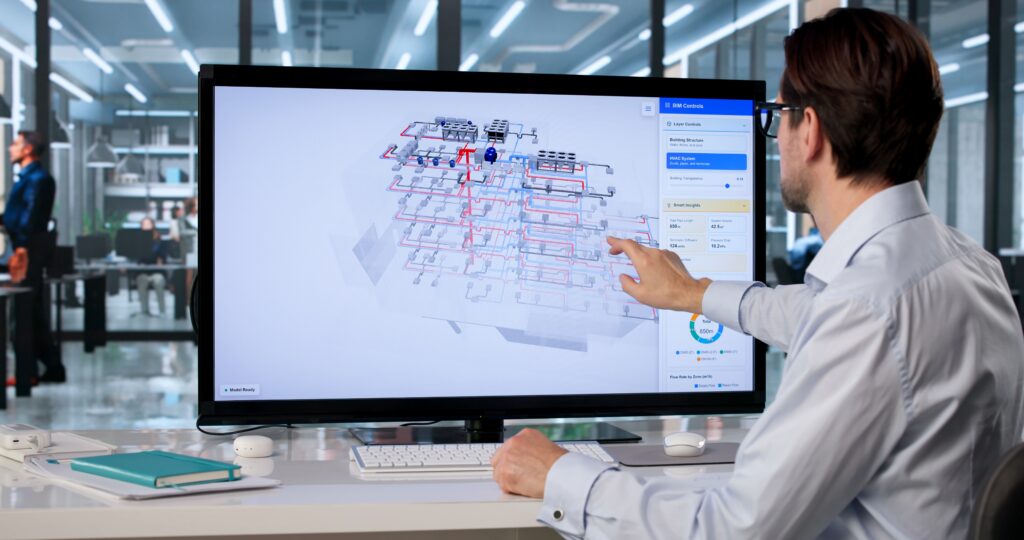
Building Information Modeling has transformed how construction projects manage design coordination and information flow. Among its most critical processes, clash detection plays a central role in ensuring that building systems integrate correctly before construction begins. As projects grow in complexity, the ability to identify and resolve conflicts early becomes essential to maintaining efficiency and reducing risk.
Without structured coordination, inconsistencies between models can lead to installation conflicts, delays, and costly rework on-site. These issues often emerge when multiple disciplines work in parallel without fully aligned information. BIM clash detection provides a proactive approach by identifying these issues within a digital environment, allowing teams to resolve them before they impact construction. This structured process supports more reliable project delivery and strengthens coordination across all disciplines.
Key Points Summary
- BIM clash detection identifies conflicts between building systems before construction.
- It relies on coordinated 3D BIM modelling and federated models.
- Early conflict resolution reduces rework and on-site disruptions.
- Structured workflows improve coordination between disciplines.
- Different types of clashes require different resolution approaches.
- Regular coordination cycles support consistent model accuracy.
- Clash detection contributes to reliable information delivery across project phases.
- Effective implementation strengthens digital construction workflows.
Understanding BIM Clash Detection
BIM clash detection is the process of identifying and resolving conflicts between different elements within a coordinated digital model. These conflicts may occur when components from separate disciplines occupy the same physical space or violate defined spatial or functional requirements.
Rather than discovering issues during construction, clash detection allows project teams to detect problems during the design and coordination phases. This ensures that models remain aligned and that construction can proceed with fewer interruptions and less uncertainty. It also enables teams to make informed adjustments when changes are still manageable.
This process is not limited to visual checks. It involves structured comparison of multiple discipline models within a federated environment, where architectural, structural, and building systems models are combined for coordination. By analyzing these models together, teams can identify inconsistencies that would otherwise remain hidden.
Clash detection transforms digital models into coordination tools rather than simple design outputs. This shift supports more accurate planning and reduces uncertainty throughout the project lifecycle. It also ensures that models become a shared reference point for all stakeholders rather than isolated design deliverables.
Types of Clashes in BIM
Not all clashes are the same. Understanding the different types of conflicts helps teams prioritize resolution and apply appropriate coordination strategies. Each type of clash requires a specific approach to ensure that issues are resolved efficiently and without introducing new constraints.
Hard Clashes
Hard clashes occur when two physical elements occupy the same space. For example, a structural beam intersecting a ventilation duct is a direct physical conflict that must be resolved before construction.
These clashes are typically the most critical because they represent immediate installation issues. If left unresolved, they can lead to delays, rework, and potential safety concerns on-site. Hard clashes are often the easiest to detect but require careful coordination to resolve without affecting other systems.
Typical examples of hard clashes include:
- Structural elements intersecting mechanical systems
- Electrical conduits passing through load-bearing components
- Plumbing systems conflicting with architectural layouts
These conflicts must be addressed early to ensure constructability and avoid costly adjustments later.
Soft Clashes
Soft clashes involve elements that do not physically intersect but violate required clearances or tolerances. For example, insufficient space around equipment for maintenance access is considered a soft clash.
Although less visible than hard clashes, these issues are equally important. They affect usability, compliance, and long-term operational performance. Soft clashes often relate to functional requirements rather than purely spatial conflicts.
Common soft clash situations include:
- Insufficient clearance for maintenance or inspection
- Equipment placed too close to walls or other systems
- Access pathways blocked by design elements
Addressing these issues ensures that the building remains functional and maintainable after construction is completed.
Workflow or Process Clashes
Workflow clashes relate to sequencing or constructability issues rather than physical conflicts. These occur when construction activities or system installations are planned in a way that creates logistical conflicts.
For example, installing one system may block access required for another. Identifying these issues early supports more efficient planning and reduces disruptions during construction.
Typical workflow clashes include:
- Installation sequences that require rework of previously completed systems
- Site access limitations during phased construction
- Conflicts between temporary and permanent installations
Understanding these categories allows teams to approach clash detection in a structured way, ensuring that all relevant issues are identified and addressed appropriately.
How BIM Clash Detection Works
Clash detection follows a structured workflow that ensures models are coordinated consistently throughout the project. This workflow is iterative, meaning it is repeated throughout the project lifecycle to maintain alignment as models evolve.
Model Aggregation
The process begins by combining discipline-specific models into a federated model. Each discipline maintains its own model, but they are reviewed together within a shared environment.
This aggregation provides a comprehensive view of the project, allowing interactions between systems to be analyzed effectively. It also ensures that all stakeholders are working from a consistent reference point.
Key considerations during aggregation include:
- Ensuring model compatibility across disciplines
- Aligning coordinate systems and reference points
- Verifying model completeness before coordination
These steps help establish a reliable foundation for the detection process.
Clash Detection Analysis
Once models are combined, predefined rules are applied to identify conflicts. These rules define how elements should interact, including acceptable clearances and spatial relationships.
The analysis highlights areas where conflicts occur, allowing teams to focus on specific coordination issues rather than reviewing the entire model manually. This targeted approach improves efficiency and accuracy.
Typical detection parameters include:
- Spatial intersections between elements
- Clearance thresholds for equipment and systems
- System-specific coordination rules
These parameters ensure that detection is aligned with project requirements.
Issue Identification and Tracking
Detected clashes are documented and categorized based on severity and type. Each issue is assigned to the appropriate discipline for resolution.
Tracking systems ensure that clashes are monitored throughout the coordination process, preventing unresolved issues from being overlooked. This structured tracking also supports accountability within the project team.
A typical issue tracking process includes:
- Assigning responsibility for each clash
- Setting resolution priorities
- Monitoring progress through coordination meetings
This ensures that all issues are addressed systematically.
Resolution and Model Updates
Teams review identified clashes and adjust their models accordingly. This may involve rerouting systems, modifying component sizes, or adjusting layouts.
Updated models are then reintroduced into the coordination process, and the detection cycle is repeated to confirm that issues have been resolved. This iterative process ensures continuous improvement of model quality.
This workflow ensures continuous improvement of model accuracy and supports consistent coordination as the project evolves.
Key Benefits of BIM Clash Detection
Clash detection provides measurable benefits across design and construction phases by improving coordination and reducing uncertainty. These benefits are not isolated but contribute to overall project performance.
Prevention of On-Site Errors
Identifying conflicts before construction eliminates many of the issues that typically arise during installation. This reduces the need for reactive problem-solving on-site.
Early resolution ensures that systems fit as intended, supporting smoother construction workflows and reducing disruptions.
Reduction of Rework
When conflicts are detected late, they often require modifications to installed components. Clash detection minimizes this risk by resolving issues during the design phase.
Reducing rework helps maintain project schedules and avoids unnecessary material waste, contributing to more efficient resource use.
Improved Coordination Between Disciplines
Clash detection encourages structured collaboration between architectural, structural, and building systems teams. By working within a shared model environment, teams can align their designs more effectively.
This coordination reduces misunderstandings and ensures that all disciplines work toward consistent project objectives.
Enhanced Decision-Making
By providing clear visibility into potential conflicts, clash detection supports informed decision-making. Project teams can evaluate alternatives and select solutions that balance technical requirements with practical constraints.
This structured approach reduces uncertainty and improves confidence in design outcomes.
Role of Clash Detection in BIM Coordination
Clash detection is a central component of BIM coordination processes. It supports the integration of multiple discipline models and ensures that information remains consistent across the project.
Within coordinated workflows, clash detection is not a one-time activity. It is performed regularly as models evolve. This continuous process helps maintain alignment between disciplines and ensures that new changes do not introduce additional conflicts.
Clash detection also supports communication between teams by providing a structured framework for discussions. Instead of relying on assumptions, teams can base decisions on clearly identified issues within the model.
Key coordination benefits include:
- Improved visibility of system interactions
- Structured communication between disciplines
- Clear prioritization of coordination issues
- Consistent validation of model updates
This structured approach reduces ambiguity and helps teams focus on resolving defined issues rather than interpreting incomplete information.
BIM Clash Detection Across Project Phases
Clash detection contributes throughout the project lifecycle, although its focus evolves as the project progresses.
Design Phase
During design, clash detection ensures that models from different disciplines align spatially and functionally. Early coordination reduces the risk of major design conflicts later.
This phase benefits the most from proactive detection, as changes can be made with minimal impact. It also supports better design decisions by identifying constraints early.
Construction Phase
During construction, clash detection supports ongoing coordination as project conditions evolve. Updates to models reflect real-world changes, and new clashes can be identified and resolved as needed.
This helps maintain alignment between design intent and construction reality and reduces unexpected disruptions on-site.
Handover and Operations
Toward project completion, clash detection supports validation of as-built models. Ensuring that systems are accurately represented in the final model improves the quality of information delivered at handover.
Reliable models support:
- Maintenance planning
- Facility management operations
- Future renovations or upgrades
This continuity ensures that digital information remains useful beyond construction.
Practical Considerations for Effective Implementation
Implementing clash detection effectively requires more than running automated checks. It depends on structured processes and clearly defined responsibilities.
Project teams should consider the following:
- Establishing clear modelling standards to ensure consistency.
- Defining coordination schedules and review cycles.
- Assigning responsibility for clash resolution across disciplines.
- Maintaining accurate and up-to-date models throughout the project.
- Aligning clash detection processes with overall BIM implementation strategies.
In addition, successful implementation depends on:
- Consistent communication between teams
- Regular validation of model quality
- Clear documentation of decisions and changes
These considerations ensure that clash detection remains a coordinated process rather than an isolated technical task.
Alignment With BIM Services and Workflows
Clash detection is closely connected to broader BIM services, including 3D BIM modelling, coordination, and BIM implementation. It relies on accurate models, structured workflows, and clearly defined information requirements.
Within digital construction workflows, clash detection acts as a validation mechanism that ensures models remain usable and reliable. It supports coordination, reduces risk, and contributes to consistent information delivery across project phases.
It also plays a key role in:
- Supporting clash-free design development
- Improving constructability reviews
- Ensuring consistency between design and execution
DBABIM integrates clash detection within its BIM coordination and implementation processes to ensure that digital models support efficient construction and long-term information management. This structured approach helps maintain alignment between design intent and project execution.
Conclusion
BIM clash detection is a fundamental process that helps prevent costly on-site errors by identifying conflicts before construction begins. By supporting structured coordination, reducing rework, and improving decision-making, it strengthens the reliability of digital construction workflows.
Understanding how clash detection works and how it integrates into BIM processes allows project teams to manage complexity more effectively. With clear workflows, consistent coordination, and reliable models, projects can achieve greater efficiency and predictability.
For organizations seeking to improve coordination and reduce construction risks, structured BIM processes supported by experienced teams such as DBABIM provide a reliable foundation for successful project delivery.